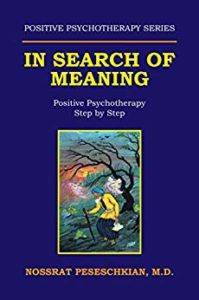
Five Benefits of Positive Psychotherapy
The primary goal of PPT is to help individuals better understand the skills and capabilities they do and do not have to achieve a greater sense of inner balance. This is achieved by exploring innate resources – physical, emotional, spiritual, and cognitive – that the individual already has and may need help tapping into in positive ways.
There are many benefits of positive psychotherapy and in approaching our mental health in this way. Below, I’ve explored the top five in more detail.
1. Empowers the individual
As PPT places a strong emphasis on helping the individual to examine their strengths, skills, and capabilities in a positive manner, it increases their sense of empowerment and control over the different areas of their life, as well as their capacity to handle challenges and negative experiences (Rashid, 2014).
The therapist’s role in the client–therapist relationship is to encourage the individual to uncover things on their own terms. It places the good with the bad, helping individuals find the balance they need to accept all parts of themselves.
This integration of skills, weaknesses, virtues, vulnerabilities, and strengths helps to build a more balanced perspective rather than reducing individuals to merely their symptoms or challenges.
2. Positive reframing of negative symptoms and a focus on balance
PPT brings the negative in line with the positive, bringing the two into alignment and balance.
This approach helps individuals to better understand their strengths and skills, where they might have gaps, and how these can perpetuate negative feelings or imbalances if not addressed appropriately.
3. Acknowledges and supports cultural transitions and differences
Because PPT encourages empowerment on the individual, it can help them to feel more in control across different areas of their life, even when it might feel that external circumstances are taking over. This has proven beneficial for individuals experiencing conflict in multicultural environments or relationships.
Huysse-Gaytandjieva and Bontcheva (2013) explored migration and the challenges faced by those who had moved to new countries and cultures. They found that those who applied positive psychotherapy techniques were better able to overcome these challenges, with two-thirds of participants reporting that depressive symptoms were entirely resolved.
4. Better management of expectations and therapy outcomes
PPT acknowledges the importance of the client–therapist relationship, and self-directed techniques are instrumental in helping individuals get the most out of the therapy (Rashid & Seligman, 2018).
With a greater awareness of personal capabilities, strengths, and skills, the individual can understand their mental health journey and how they can improve it. As a result, therapy expectations are better managed, and individuals see the outcome of PPT as being about more than merely the elimination of negative symptoms or feelings.
5. Proven to help a range of mental health conditions
With its focus on strengths and cultivation of the positive elements of life, PPT has shown to be highly beneficial across a range of mental health conditions including psychosis (Schrank et al., 2016), suicidal ideation (Johnson et al., 2010), depression (Seligman et al., 2006; Carver, Scheier, & Segerstrom, 2010) and borderline personality disorder (Uliaszek, Rashid, Williams, & Gulamani, 2016).
How Does Positive Psychotherapy Relate to Positive Psychology?
The two approaches sound very similar, and there are some cross-overs in how they tackle individual experiences within therapy. Positive psychology is popularly attributed as being the brain-child of Martin Seligman, developed in 1998; positive psychotherapy is more commonly attributed to Nossrat Peseschkian, first developed in 1968.
What are the similarities and differences between the two?
Both approaches emphasise personal development and the importance of tapping into innate resources and strengths to overcome challenges and negative emotions. Both also assume that we are all inherently good and need to work hard when external influences try to prevent us from becoming the best versions of ourselves.
There are also some slightly nuanced, but very essential, differences (Peseschkian, 2012):
| Positive psychotherapy |
Positive psychology |
| Believes all negative experiences can be challenged and reframed in a positive way, as they are essentially opportunities for further growth. |
Acknowledges negative experiences and emotions but doesn’t necessarily incorporate them in the same way. |
| Focuses more on multicultural experiences and the challenges that individuals can face across different cultures, both similar and different. |
Has a more Eurocentric approach to therapy and an individual’s experiences. |
| Influenced equally by humanistic and psychodynamic approaches and seeks to integrate the best of both. |
Less focused on humanistic models and therapies and less integrative of other psychological approaches. |
Seligman has spoken extensively about both approaches and how the two are related in specific ways, identifying that positive psychotherapy helps individuals to move past the process of suffering to uncover deeper insights about their wellbeing (Seligman & Wyatt, 2008).
While acknowledging negative or traumatic experiences is a core component of many therapeutic approaches, Seligman has acknowledged that positive psychotherapy does have a more positive focus when going through this process.
3 Positive Psychotherapy Interventions
 Positive psychotherapy has proven beneficial in a range of clinical settings addressing various mental health concerns.
The interventions utilized in PPT are varied and will often depend on what the individual expresses in the therapy sessions.
One distinct component of PPT interventions is how they incorporate imagination and intuition as part of the therapeutic process. Storytelling is another key way PPT encourages individuals to engage with their therapy journey, and this idea of building the self into the stories helps individuals to better articulate their journeys, experiences, challenges, and desires.
Through this process, PPT therapists can begin to introduce adjustments or dive deeper into sensitive topics without seeming to ‘attack’ the individual.
Therapists can also help those they work with to reframe their experiences and symptoms in positive ways, and create better balance. Once individuals can accept all aspects of themselves and begin to see negative experiences in a positive light, they generally no longer repeat those negative experiences (Tugade & Fredrickson, 2004).
The specific interventions used in this process focus on empowering the individual and providing them with the tools and resources to face up to negative or traumatic experiences, cultivate resilience, and develop better emotional functioning.
These include:
1. Practicing gratitude
Gratitude is a strong cognitive state, generally associated with the idea that you have achieved a personal benefit that wasn’t initially or intentionally sought after (Emmons & McCullough, 2003). Feeling gratitude can have a strong re-energizing impact on our emotional wellbeing and has been shown to lead to greater feelings of happiness and healing.
In therapy, practicing gratitude can begin with making the time to acknowledge all the small everyday things that we are grateful for. Gratitude journals, worksheets, and resources are widely available, showing individuals everything they have in their lives to feel grateful for – something many of us often forget to acknowledge – is a popular intervention in PPT.
2. Practicing forgiveness
Forgiveness – for ourselves, others, and general experiences – can be a vital part of healing and promoting a greater sense of wellbeing. Worthington (2003) proposed two core types of forgiveness within clinical/therapy settings:
- Decisional forgiveness: when the individual states a behavioral intent to forgive.
- Emotional forgiveness: when the individual has true emotional acceptance of the situation, experience, or personal feelings that require forgiveness.
We can utilize decisional forgiveness but still feel emotionally upset, which can lead to further unforgiveness and negative symptoms related to our mental health (Worthington & Scherer, 2004). PPT utilizes the practice of forgiveness as a key intervention, particularly focusing on emotional forgiveness, so that individuals feel a complete sense of healing when moving past negative symptoms.
3. Practicing empathy
The PPT approach teaches that all humans are inherently good and innately want to live meaningful lives and have enriching relationships. Empathy is a core component of this, but it has been shown to routinely fail as an innate ability in several challenging or conflicting scenarios (Zaki & Cikara, 2015).
Most empathy-related interventions build on the notion that we are all capable of empathy, and these interventions support individuals to focus instead on developing their ability to tap into empathy and target it in specific ways.
One approach used by PPT is storytelling, which asks individuals to put themselves in another’s shoes and describe how they might feel, react, or respond to challenging and positive situations.



 Seeking out any type of therapy can be daunting.