12+ Best CBT Books to Master Cognitive Behavioral Therapy

Amanda O'Bryan, PhD, LPCA Amanda O'Bryan, PhD, LPCA, is a licensed mental health counselor specializing in harm reduction and neurodiversity.

·

35 minute read
Clinically reviewed by
Tiffany Sauber Millacci, PhD Tiffany Sauber Millacci, PhD, is a passionate educator and researcher who teaches university and elementary students and writes on education, emotional literacy, and gratitude.

·

·

Fact-checked against current peer-reviewed research. 

Best CBT books

""Cognitive-Behavioral Therapy (CBT) is a tool that therapists use to aid clients in reducing the thoughts that lead to maladaptive behaviors.

In its simplest form, the concept is to identify unhelpful thoughts and learn to reframe them in a way that leads to more positive outcomes.

In recent years, hundreds of books have been published on CBT, many written for individuals who are not clinicians.

How do you decide which is best?

We are here to help and have made a list of the best current Cognitive-Behavioral Therapy books for practitioners and anyone who wants to learn and apply these skills daily.

Before you continue, we thought you might like to download our five positive psychology tools for free. These science-based exercises will provide you with detailed insight into positive CBT and the tools to apply it in your therapy or coaching.

6 Cognitive-Behavioral Therapy Books for Learning CBT

Of all the therapeutic modalities, CBT is widely considered the “gold standard” (David et al., 2018). Therefore, there’s no shortage of reputable books to help teach practitioners its methods.

Here are some of our favorites.

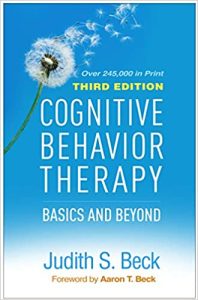
1. Cognitive Behavior Therapy: Basics and Beyond – Judith S. Beck
Cognitive Behavior Therapy

Cognitive Behavior Therapy: Basics and Beyond is a classic resource for anyone seeking a comprehensive understanding of CBT.

The text provides a well-organized and insightful overview of CBT principles and techniques. This third edition incorporates the latest advancements in the field, making it an up-to-date and relevant guide.

Packed with case examples, worksheets, and exercises, this book equips novice and experienced therapists with the knowledge and tools to apply CBT and help clients achieve meaningful change effectively.

Find the book on Amazon.


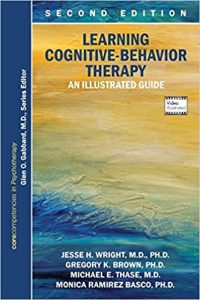
2. Learning Cognitive-Behavior Therapy: An Illustrated Guide – Jesse H. Wright, Gregory K. Brown, Michael E. Thase, and Monica Ramirez Basco
Learning Cognitive-Behavior Therapy

For a more interactive approach, the second edition of Learning Cognitive-Behavior Therapy provides 23 all-new videos as well as figures, charts, worksheets, checklists, and tables.

The book covers the fundamental principles of CBT, including assessment, case conceptualization, and treatment planning.

The visual aids enhance comprehension and facilitate the learning process. Whether you’re a student or practitioner, this illustrated guide is an essential tool for mastering the techniques and interventions of CBT.

Find the book on Amazon.


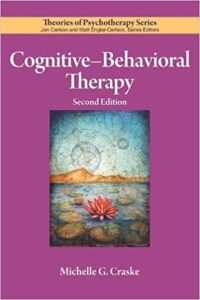
3. Cognitive-Behavioral Therapy – Michelle G. Craske
Cognitive-Behavioral Therapy

With a wealth of knowledge and expertise, Michelle Craske presents a clear and systematic approach to understanding and implementing CBT techniques.

The book covers a wide range of topics, including assessment, case conceptualization, and the application of CBT across various disorders.

Craske’s writing is accessible yet sophisticated, making it suitable for students and seasoned practitioners. This second edition incorporates the latest research and developments in the field and provides diverse case examples.

Find the book on Amazon.


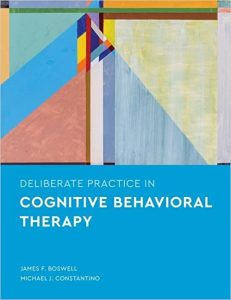
4. Deliberate Practice in Cognitive Behavioral Therapy – James F. Boswell and Michael J. Constantino
Deliberate Practice in Cognitive Behavioral Therapy

Deliberate Practice in Cognitive Behavioral Therapy is a resource specifically tailored for clinicians seeking to enhance their skills and effectiveness in delivering CBT. The book provides a detailed exploration of deliberate practice.

Drawing from real-world examples and research, this book empowers clinicians to engage in purposeful, focused, and iterative practice to refine their CBT competencies and continually optimize client outcomes.

Clinicians at all experience levels will find this text immensely valuable in honing their CBT skills and achieving professional excellence.

Find the book on Amazon.


5. The Comprehensive Clinician’s Guide to Cognitive Behavioral Therapy – Leslie Sokol and Marci Fox
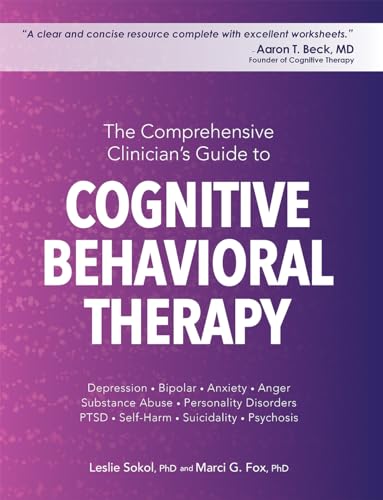
The Comprehensive Clinician's Guide to Cognitive Behavioral Therapy

This practitioner-focused guide was written by two clinicians who received direct training from CBT founder Aaron T. Beck.

It discusses CBT conceptualization and intervention for a variety of clinical issues, such as substance abuse, personality disorders, PTSD, psychosis, depression, anxiety, and anger.

With coping cards, reproducible worksheets, and detailed treatment plans it gives clinicians at all levels the tools they need to assist clients in recognizing and reorganizing harmful thought patterns.

Find the book on Amazon.


6. Culturally Responsive Cognitive Behavior Therapy: Practice and Supervision – Gayle Y. Iwamasa and Pamela A. Hays
Culturally Responsive Cognitive Behavior Therapy

As clinicians, it’s vitally important to understand the interaction between a client’s cultural background and the tools that one presents in session.

Culturally Responsive Cognitive Behavior Therapy explores the use of CBT with various ethnic, racial, and religious groups.

It also presents strategies for working with clients with diverse identities, such as those who are differently abled and/or members of the LGBTQ+ community.

Find the book on Amazon.

Best Books on CBT According to Amazon

For individuals looking to implement CBT for self-development, Amazon reviews indicate a clear consensus on which books are most effective. Here are some of the top performers, most of which have several thousand positive reviews.

1. The CBT Deck for Clients and Therapists – Seth Gillihan
The CBT Deck

This deck of cards introduces CBT in bite-size exercises that anyone can use. Each card falls under one of three categories: think, act, or be.

Practitioners can use the cards, which are also useful for anyone wanting to decrease their limiting or negative thoughts and learn to live more intentionally.

Find the book on Amazon.


2. Overcoming Unwanted Intrusive Thoughts – Sally M. Winston and Martin N. Seif
Overcoming Unwanted Intrusive Thoughts

This book provides a compassionate and comprehensive approach to understanding and managing unwanted intrusive thoughts using CBT.

The authors skillfully combine evidence-based techniques with relatable case examples to help readers challenge and reframe distressing thoughts.

Using accessible language and step-by-step exercises, this guide empowers individuals to reclaim control over their minds and find relief from the torment of intrusive thoughts.

Find the book on Amazon.


3. The CBT Journal for Mental Health: Evidence-Based Prompts to Improve Your Well-Being – Jordan A. Madison
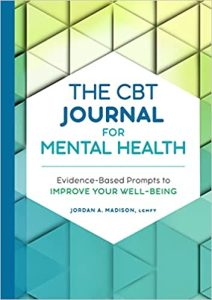
The CBT Journal for Mental Health

This journal provides the reader with a variety of exercises, writing prompts, affirmations, and other skills that will benefit one’s mental health.

It was created to accompany the CBT Workbook for Mental Health (reviewed below) but can also be used as a standalone journal.

Find the book on Amazon.


4. Mind Over Mood: Change How You Feel by Changing the Way You Think – Dennis Greenberger and Christine A. Padesky
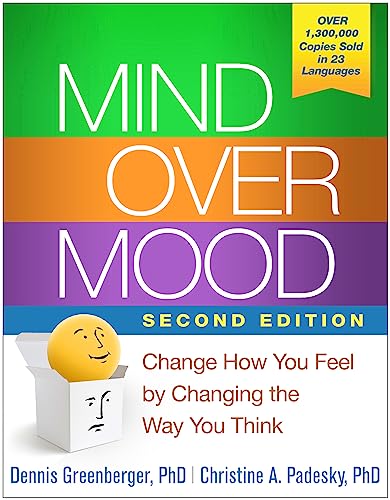
Mind Over Mood

This extensively updated second edition of Mind Over Mood teaches readers step-by-step how to recognize and alter the thought patterns that underlie depression, anxiety, anger, guilt, and shame.

It includes 25 new worksheets, expanded content on anxiety, and new chapters on goal-setting and sustaining progress.

It’s a great resource for anyone looking to apply a CBT-based approach to mastering their own thoughts and emotions, either alone or with the support of a therapist.

Find the book on Amazon.


5. Retrain Your Brain: Cognitive Behavioral Therapy in 7 Weeks – Seth J. Gillihan
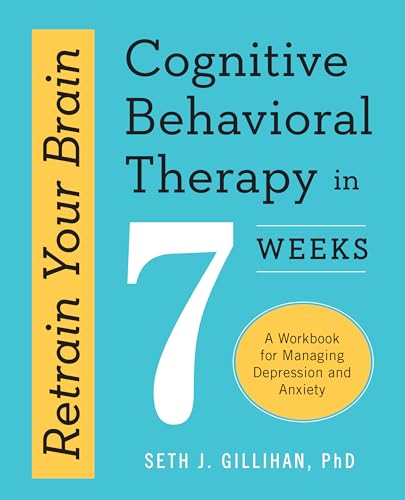
Retrain Your Brain

This book provides a practical approach to managing depression and anxiety. The author’s step-by-step guidance and structured format make it easy to follow and implement CBT techniques.

Each week is dedicated to a specific aspect of the modality, offering clear explanations, insightful exercises, and real-life examples to reinforce learning.

The book empowers listeners to reframe negative thoughts, challenge unhelpful beliefs, and develop effective coping strategies.

Find the book on Amazon.

Who doesn’t love the convenience of an audiobook? While many of the books we’ve explored already also have audiobook versions, these ones were highlighted as being especially enjoyable in audiobook format due to their digestible structure and narration style.

1. Cognitive Behavioral Therapy Made Simple: 10 Strategies for Managing Anxiety, Depression, Anger, Panic, and Worry – Seth J. Gillihan

Cognitive Behavioral Therapy Made Simple

Cognitive Behavioral Therapy Made Simple is an excellent audiobook that clearly explains the complex concepts of CBT. The author’s concise and engaging narration keeps the listener engaged throughout.

The book provides practical tools and techniques to tackle common mental health challenges, empowering individuals to take control of their emotions and thoughts.

Each strategy is presented with real-life examples, making it relatable and applicable.

Find the audiobook on Audible.


2. Cognitive Behavioral Therapy: Simple Techniques to Instantly Be Happier, Find Inner Peace, and Improve Your Life – Olivia Telford

Cognitive Behavioral Therapy

This audiobook by Olivia Telford is a transformative tool that offers practical guidance for enhancing one’s wellbeing.

Telford’s soothing narration style creates a calming atmosphere as she explores the principles of CBT.

The book provides easy-to-understand techniques that can be implemented immediately to cultivate happiness, inner peace, and personal growth.

Find the audiobook on Audible.


3. Cognitive Behavioural Therapy for Dummies – Rhena Branch and Rob Willson

Cognitive Behavioural Therapy for Dummies

This revised third edition of a well-known classic provides an approachable, jargon-free introduction to CBT.

Branch and Willson take listeners through the fundamentals of CBT and explain how its methods can be applied to a wide range of common problems, from everyday anxiety and depression to more complicated conditions like OCD, PTSD, and addiction.

The audiobook is widely regarded as a strong starting point for anyone interested in learning more about CBT.

Find the audiobook on Audible.

CBT Workbooks: Reviews and Summaries

CBT is a modality that lends itself well to written exercises, as it’s often helpful to get distorted thoughts out of your head and onto paper. These workbooks help practitioners and individuals do just that across a variety of presenting challenges.

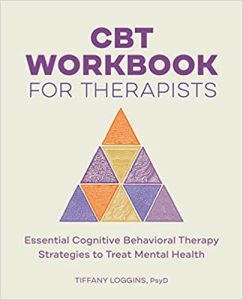
1. CBT Workbook for Therapists: Essential Cognitive Behavioral Therapy Strategies to Treat Mental Health – Tiffany Loggins

CBT Workbook for Therapists

Workbooks allow the reader to learn and apply the principles of CBT in a structured way. This workbook offers hundreds of science-based strategies for clinicians and clients to practice the skills of CBT.

The exercises are concise and organized into specific mental health categories, such as addiction, anger management, anxiety, and others.

Find the book on Amazon.


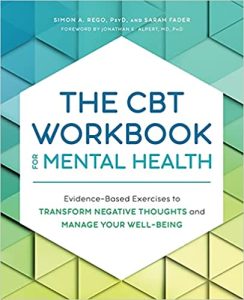
2. The CBT Workbook for Mental Health: Evidence-Based Exercises to Transform Negative Thoughts and Manage Your Wellbeing – Simon Rego and Sarah Fader

The CBT Workbook for Mental Health

This workbook, which can be used in tandem with the CBT journal reviewed above, promises to help readers reduce negative thought patterns, manage stress, and grow their self-esteem.

The workbook is written to be easily accessible to anyone wanting to learn more about CBT.

Find the book on Amazon.

The CBT workbook for mental health by Dr. Simon A. Rego

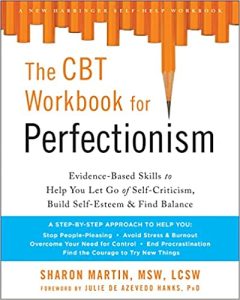
3. The CBT Workbook for Perfectionism: Evidence-Based Skills to Help You Let Go of Self-Criticism, Build Self-Esteem, and Find Balance – Sharon Martin

The CBT Workbook for Perfectionism

Wanting to do your best is an admirable quality, but perfectionism can be debilitating when the desire to be the best becomes unrealistic and unmanageable.

This workbook is designed to help those who suffer from perfectionism learn more realistic approaches and how to exercise self-compassion.

Find the book on Amazon.


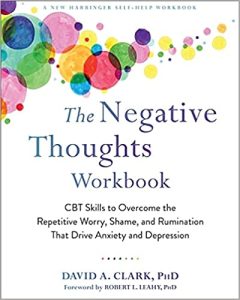
4. The Negative Thoughts Workbook: CBT Skills to Overcome the Repetitive Worry, Shame, and Rumination That Drive Anxiety and Depression – David A. Clark

The Negative Thoughts Workbook

The cornerstone of the theory of CBT is identifying the negative thought patterns that lead to anxiety and depression.

This workbook helps those that suffer from worry and rumination learn to name and release the maladaptive thought patterns.

Find the book on Amazon.


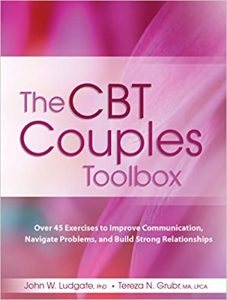
5. The CBT Couples Toolbox: Over 45 Exercises to Improve Communication, Navigate Problems and Build Strong Relationships – John Ludgate and Tereza Grubr

The CBT Couples Toolbox

CBT can also be used to help relationships and improve communication.

This workbook offers exercises for couples that will help them learn to communicate more effectively and compassionately, ultimately leading to greater harmony and intimacy.

Find the book on Amazon.

Toolkit-Box

World’s Largest Positive Psychology Resource

The Positive Psychology Toolkit© is a groundbreaking practitioner resource containing over 500 science-based exercises, activities, interventions, questionnaires, and assessments created by experts using the latest positive psychology research.

Updated monthly. 100% science-based.

“The best positive psychology resource out there!”
— Emiliya Zhivotovskaya, Flourishing Center CEO

5 Best CBT Books for Anxiety

Anxiety remains one of the most popular use cases for CBT (Kaczkurkin & Foa, 2015). The following five books are among the best resources available to both practitioners and individuals seeking to combat anxiety with this modality.

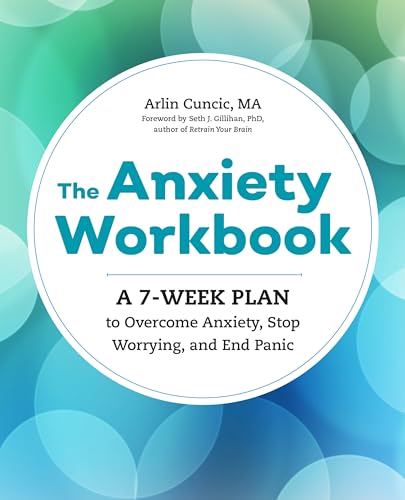
1. The Anxiety Workbook: A 7-Week Plan to Overcome Anxiety, Stop Worrying, and End Panic – Arlin Cuncic

The Anxiety Workbook

This organized workbook leads readers through a targeted seven-week CBT program for conquering anxiety in all its forms.

The workbook is one of the more comprehensive CBT anxiety resources available for general readers because it also includes a mind-body component, covering core cognitive techniques along with physiological and nutrition-based relaxation techniques.

Find the book on Amazon.


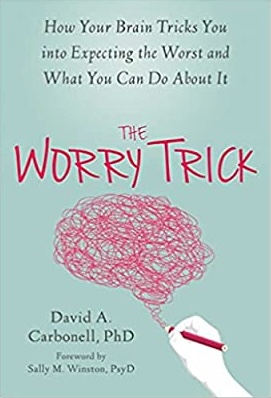
2. The Worry Trick: How Your Brain Tricks You into Expecting the Worst and What You Can Do About It – David A. Carbonell

The Worry Trick

David Carbonell, an expert in anxiety, explains how persistent worry works as a “trick” to make you view anxious thoughts as actual dangers rather than fleeting mental occurrences.

Based on CBT and acceptance-based techniques, the book assists readers in identifying the worry cycle’s pattern, quitting unhealthy coping mechanisms, and reacting to anxious thoughts in ways that lessen their influence.

Find the book on Amazon.


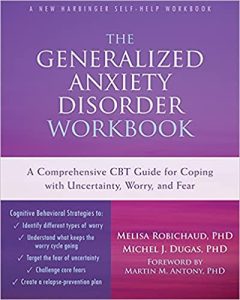
3. The Generalized Anxiety Disorder Workbook: A Comprehensive CBT Guide for Coping With Uncertainty, Worry, and Fear – Melisa Robichaud and Michel J. Dugas

The Generalized Anxiety Disorder Workbook

Generalized anxiety disorder (GAD) is one of the most commonly diagnosed mental illnesses today. GAD can cause a person to worry excessively, leading to struggles with decision-making, sleeping, concentration, and more.

This popular workbook, written by renowned anxiety experts, leads the reader through exercises to help combat negative thinking patterns and learn to overcome excessive worry.

Find the book on Amazon.


4. The Social Anxiety CBT Workbook for Adults – Marcee A Martin

The Social Anxiety (CBT) Workbook for Adults

Individuals with social anxiety often struggle to make connections and feel overwhelmed by social interactions. This workbook provides simple and accessible tools to help overcome the thinking traps that lead to social anxiety.

This workbook explains how CBT can help and offers the reader positive CBT exercises, as well as mindfulness meditations for calming anxiety.

Find the book on Amazon.


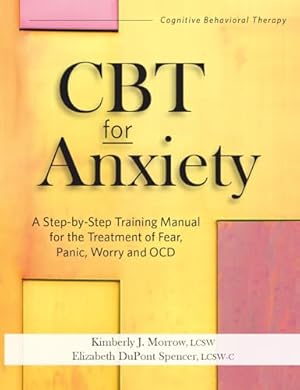
5. CBT for Anxiety: A Step-By-Step Training Manual for the Treatment of Fear, Panic, Worry and OCD – Kimberly Morrow and Elizabeth DuPont Spencer

CBT for Anxiety

This practitioner-focused manual was written by two licensed clinical social workers with a combined fifty years of experience treating anxiety and OCD.

It is brief and immediately useful, covering assessment and diagnosis, goal-setting, exposure and response prevention, relapse prevention, and the role of mindfulness.

Find the book on Amazon.

3 Best Books About CBT for Children

Research shows that CBT can work just as effectively with children as with adults (Wergeland et al., 2021). The following resources help translate the modality in ways that are engaging and accessible for both young kids and adolescents.

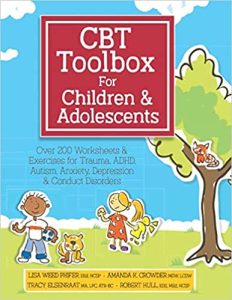
1. CBT Toolbox for Children and Adolescents: Over 200 Worksheets & Exercises for Trauma, ADHD, Autism, Anxiety, Depression & Conduct Disorders – Lisa Weed Phifer, Amanda Crowder, Tracy Elsenraat, and Robert Hull

CBT Toolbox for Children and Adolescents

Created by clinicians and teachers with years of experience, this workbook gives hundreds of CBT exercises to help children overcome challenges.

These materials can be used during sessions or assigned as homework. The exercises are grouped into the content areas of cognitive skills, relationship coaching, competency building, and brain-based learning to facilitate ease of use for practitioners.

Find the book on Amazon.


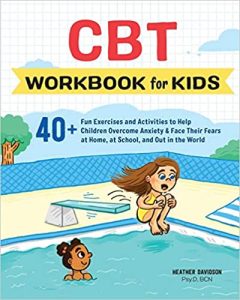
2. CBT Workbook for Kids: 40+ Fun Exercises and Activities to Help Children Overcome Anxiety & Face Their Fears at Home, at School, and Out in the World – Heather Davidson

CBT Workbook for Kids

This fun and helpful workbook is designed for kids aged 6–11 who struggle with anxious thoughts and excessive worry.

The book provides kids with games, drawing challenges, and exercises to teach them skills for emotion regulation, communication, and focus.

Relaxation exercises are included, and stories from other kids provide a relatable tone.

Find the book on Amazon.


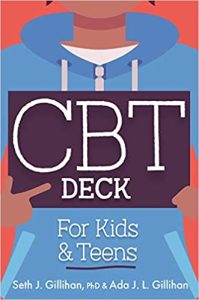
3. CBT Deck for Kids and Teens – Seth J. Gillihan and Ada J. L. Gillihan

CBT Deck for Kids and Teens

Seth Gillihan is a leading author and expert in the field of mindfulness-centered cognitive behavior therapy. He cocreated this deck with his daughter Ada to help kids and teens learn and use these skills.

The deck covers topics such as learning to be present, overcoming negative thoughts and excessive worry, and making healthy decisions.

Find the book on Amazon.

17 Positive CBT and Cognitive Therapy Tools

17 Science-Based Ways To Apply Positive CBT

These 17 Positive CBT & Cognitive Therapy Exercises [PDF] include our top-rated, ready-made templates for helping others develop more helpful thoughts and behaviors in response to challenges, while broadening the scope of traditional CBT.

Created by Experts. 100% Science-based.

A Take-Home Message

Cognitive-Behavioral Therapy is a long-standing therapeutic technique with decades of research demonstrating its efficacy. It has been shown to be a useful tool for helping with many types of mental health struggles and many different kinds of clients.

Children, couples, families, and individuals can all benefit from learning the skills that CBT provides. As this article shows, various resources are available for learning about CBT independently without a therapist. These books and self-help workbooks provide guidance and exercises for learning CBT principles and applying them to daily life.

These resources often include step-by-step instructions, examples, and exercises to help individuals understand and practice CBT techniques. While having a therapist can provide additional support and personalized guidance, self-learning CBT resources can still be valuable for gaining insight into thought patterns, emotions, and behaviors and developing skills to manage mental health challenges effectively.

We hope you enjoyed reading this article. For more information, don’t forget to download our five positive psychology tools for free.

Ed: Updated February 2026

Frequently Asked Questions

The five steps are identifying troubling situations, becoming aware of thoughts and beliefs, recognizing inaccurate thinking, challenging negative thoughts, and adjusting thinking patterns. These steps help reshape thought processes and improve emotional responses.

Yes, you can learn CBT on your own using structured resources such as books, workbooks, and online courses. These materials provide exercises and frameworks to understand and apply CBT techniques, though a therapist can provide more personalized guidance.

Cognitive Behavior Therapy: Basics and Beyond by Judith S. Beck is highly recommended for its clear explanation of CBT principles and practical exercises, making it suitable for both beginners and professionals.

References

  • David, D., Cristea, I., & Hofmann, S. G. (2018). Why cognitive behavioral therapy is the current gold standard of psychotherapy. Frontiers In Psychiatry, 9. https://doi.org/10.3389/fpsyt.2018.00004
  • Kaczkurkin, A. N., & Foa, E. B. (2015). Cognitive-behavioral therapy for anxiety disorders: An update on the empirical evidence. Dialogues in Clinical Neuroscience, 17(3), 337–346. https://doi.org/10.31887/DCNS.2015.17.3/akaczkurkin
  • Wergeland, G. J. H., Riise, E. N., & Öst, L. G. (2021). Cognitive behavior therapy for internalizing disorders in children and adolescents in routine clinical care: A systematic review and meta-analysis. Clinical Psychology Review, 83, Article 101918. https://doi.org/10.1016/j.cpr.2020.101918
Amanda O'Bryan, PhD, LPCA
Amanda O’Bryan, PhD, LPCA
Mental Health Counselor, Consultant
Amanda O'Bryan, PhD, LPCA, is a licensed mental health counselor and cofounder of Sonder Recovery. With a PhD in Experimental Psychology and over 20 years in the field, she specializes in harm reduction, supporting neurodivergent clients and the LGBTQ community.
Clinically reviewed by
Tiffany Sauber Millacci, PhD Tiffany Sauber Millacci, PhD, is a passionate educator and researcher who teaches university and elementary students and writes on education, emotional literacy, and gratitude.
— Educator, Writer, Researcher — to verify accuracy against current research and clinical best practice. Last reviewed 7 May 2026.

Key Insights

  • Cognitive Behavioral Therapy (CBT) books offer valuable insights into managing negative thought patterns & behaviors that impact mental health.
  • These resources provide practical exercises & strategies to develop healthier thinking habits & emotional responses.
  • Reading about CBT techniques can empower individuals to improve their mental wellbeing & resilience through structured, evidence-based methods.

Membership

Looking for More Tools?

Explore membership plans starting at $359/year, with usage rights included.

Related Articles

Download 3 Free Exercises

Download 3 Free Exercises