AI Chatbots and Therapy: The Relational Illusion
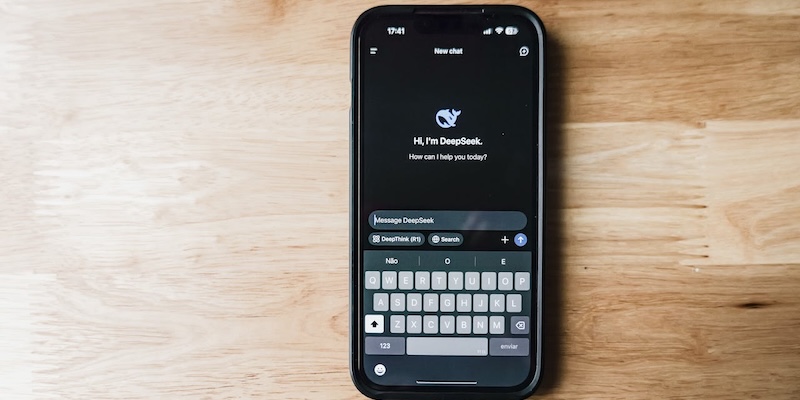
If you’ve ever used an AI chatbot such as ChatGPT, for any purpose, you’ll know that it mimics human interaction rather well.
If you’re struggling with something or need some advice, you can ask an AI assistant; it will often give a compassionate, nonjudgmental, and validating response.
AI chatbots give the illusion of a relationship due to the following design features (Sedlaková & Trachsel, 2023):
- Empathetic-sounding language (“That must be really difficult for you.”)
- Emotionally validating phrases (“That’s very understandable.”)
- Therapeutic-style encouragement (“You’re doing your best.”)
- Highly responsive and nonjudgmental (“I’m here to listen.”)
Although you may feel connected, understood, and cared for, the system is only simulating these qualities — it has no consciousness, intentionality, emotions, empathy, or moral responsibility.
Interacting with AI chatbots in therapy carries certain risks, especially for lonely people, those who are socially anxious, or those who have experienced trauma and other mental health difficulties (Sedlaková & Trachsel, 2023).
The Risks of Using AI Chatbots for Therapy
 Although AI chatbots can offer immediate support, they are not without risk. As their use expands into emotionally sensitive territory, researchers and clinicians have begun to raise important concerns.
Ethical responsibility and duty of care
Clinicians are bound by ethical guidelines and a duty of care — AI systems aren’t. They are not responsible for your safety or wellbeing and do not have the same supervision or risk management processes that clinicians do. If something harmful happens, it’s unclear who is responsible for repairing the rupture.
Emotional dependence
Conversational AI creates an illusion of care and mimics empathy, potentially leading to emotional overreliance. It may feel emotionally easier to chat with an AI chatbot, so instead of turning to people for support, you may withdraw from or avoid real human connection (Richards, 2025; Sedlaková & Trachsel, 2023).
Avoiding human connection is most common in people who use AI assistants often and already experience loneliness or social disconnection (Phang et al., 2025).
Withdrawal from human relationships
Overreliance on AI chatbots for emotional support could make it harder to tolerate the complexity of real relationships (Richards, 2025). AI chats are nonconfrontational and always responsive, and interactions happen on your terms.
Real relationships aren’t like that: They involve unpredictability, conflict, vulnerability, and reciprocity. Higher usage of AI chatbots for therapy is linked to reduced socialization over time, suggesting that reliance on AI chatbots can gradually pull people away from human contact (Phang et al., 2025).
Reinforcement of distorted beliefs
Current AI systems tend to favor agreement over reality testing, leading them to echo unrealistic or harmful statements and reinforce distorted beliefs (Moore et al., 2025).
These systems are designed to be agreeable and nonconfrontational, increasing the risk that unhelpful thinking can be strengthened rather than questioned, as it would be in therapy (Carlbring & Andersson, 2025).
AI psychosis
While it’s not a formal diagnosis, cases of AI psychosis are starting to emerge. There have been reports that prolonged and intense AI interactions can intensify (Carlbring & Andersson, 2025):
- Paranoia
- Grandiose beliefs
- Spiritual or romantic delusions
- Risk of suicidality
- Violence
Intense reliance on AI chatbots also has the potential to trigger complete psychotic episodes (Carlbring & Andersson, 2025).
This may happen because AI chatbots mirror and validate the user’s language, don’t challenge distorted beliefs, and can create escalating emotional feedback loops (Carlbring & Andersson, 2025). While noteworthy, this phenomenon is rare and currently understudied.
Privacy and confidentiality
AI chatbots may seem private and anonymous, but there’s no guarantee that the information you input isn’t being monitored and analyzed (Horn & Weisz, 2020).
Many people use AI chatbots as therapy for emotional support, precisely because it feels more private, but your data might be stored, inferred from, or used in ways you’ll never see.


 Is it safe to use AI chatbots for therapy?